2026-10-14 ·
How High Humidity Affects Drying After Water Damage in Naples
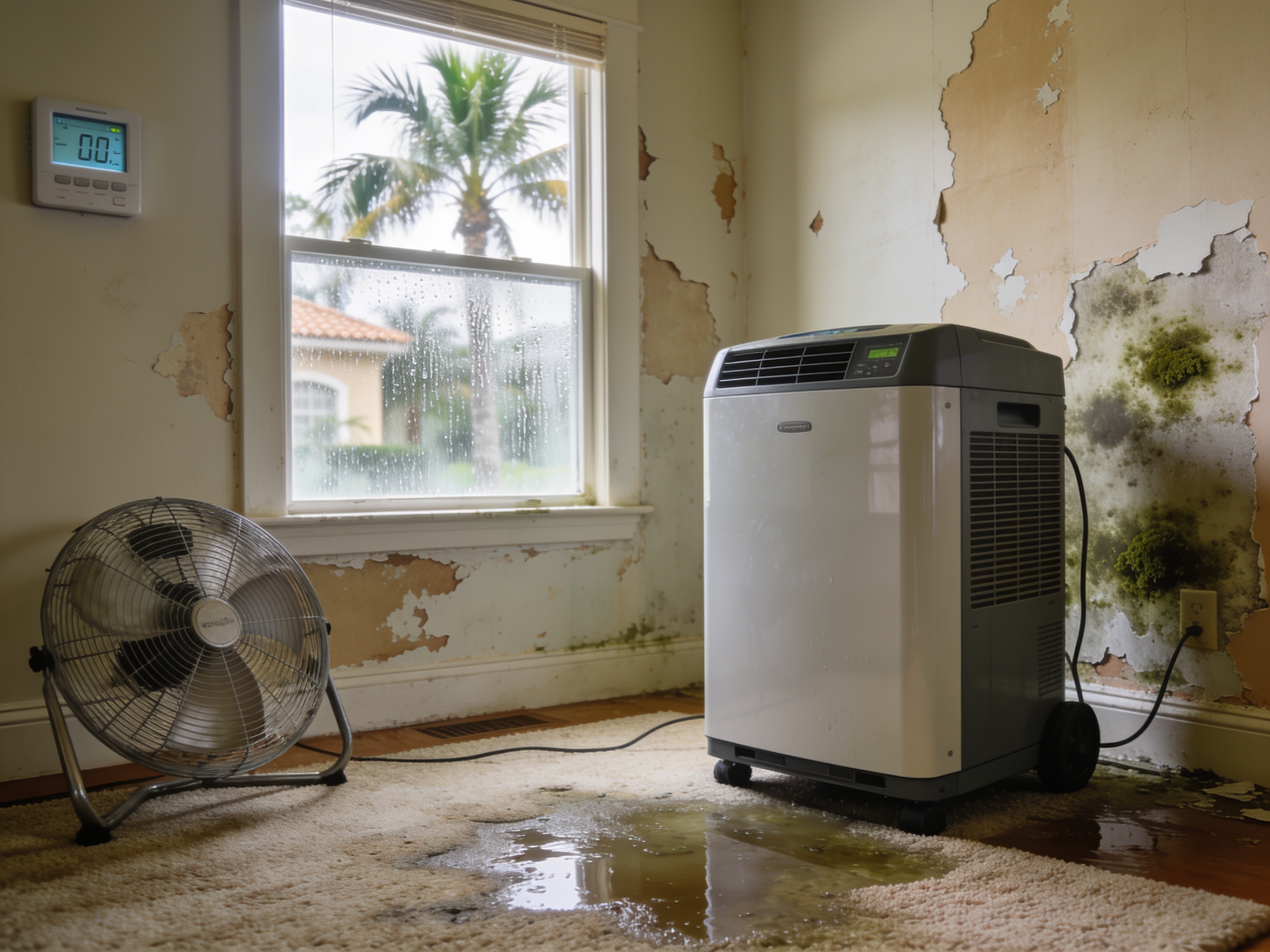
High humidity in Naples often stretches drying after water damage to 5-10 days of active equipment use, compared with 2-3 days in drier climates, because warm moist air holds more water vapor and slows evaporation from drywall, subfloors, and insulation.
How Naples Humidity Slows Moisture Evaporation
Naples sits in a tropical savanna climate where relative humidity stays above 70 percent for much of the year, even during the warm winters. This moisture-laden air reduces the vapor pressure differential that drives water out of saturated materials. In practice, a soaked carpet pad in a Port Royal residence may release only a fraction of its water load on any given day unless dehumidifiers actively pull vapor from the space. Without that mechanical help, moisture lingers in wall cavities and beneath tile, creating conditions that favor microbial growth within 48 hours. Technicians therefore run low-grain refrigerant dehumidifiers and air movers in coordinated patterns, monitoring grains per pound readings every few hours until equilibrium moisture content returns to normal ranges for Collier County construction.
Effects on Different Building Materials in Collier County Homes
Older homes in Old Naples and Downtown Naples frequently contain plaster over wood lath or early drywall that absorbs and releases moisture slowly. High ambient humidity keeps these materials above 15 percent moisture content long after visible water disappears, forcing repeated drying cycles. Newer concrete slab homes near Fifth Avenue South trap water beneath vinyl or engineered flooring because the slab itself stays cool and draws vapor from the air. In both cases, technicians must lift baseboards, create negative pressure in wall cavities, and sometimes remove sections of flooring to expose wet concrete. Failure to address trapped moisture leads to cupping hardwood or delaminated subfloors weeks later.
Strategies for Accelerating Drying in Humid Conditions
Effective drying starts with structural drying services that combine extraction, containment, and continuous dehumidification. Crews set up containment barriers to isolate wet zones, then position air movers to create turbulent airflow across every wet surface. Daily moisture logs track progress in affected rooms, allowing adjustments to equipment placement as readings drop. When outdoor dew points remain high, technicians seal the structure and run supplemental heat to raise indoor temperatures slightly, increasing the capacity of the air to carry moisture to the dehumidifiers. This controlled approach prevents the common mistake of simply opening windows, which often introduces more humidity than it removes.
Monitoring Progress and Preventing Secondary Damage
Regular readings with pin and pinless meters confirm when drywall and framing reach acceptable levels, typically below 12 percent in Collier County conditions. Homeowners in Aqualane Shores and near the Naples Pier notice musty odors or soft spots first because salt air adds another layer of corrosion risk to metal fasteners. Checking behind baseboards and inside HVAC returns catches hidden pockets before they feed mold colonies. For deeper guidance on timelines, see What Influences the Time Needed to Dry a Naples Home. Older properties also benefit from the inspection steps outlined in Recognizing Hidden Water Damage in Older Naples Houses.
When Professional Equipment Becomes Essential
Once relative humidity inside the structure exceeds 60 percent for more than a day, portable dehumidifiers sized to the square footage become necessary. In larger residences near Third Street South, multiple 70-pint units may run simultaneously for several days. Owners who attempt drying with fans alone often find that surface moisture evaporates while deeper layers remain wet, leading to hidden mold that requires later mold remediation. Scheduled service calls during business hours allow technicians to adjust equipment without disrupting household routines, keeping the process efficient from extraction through final clearance testing.