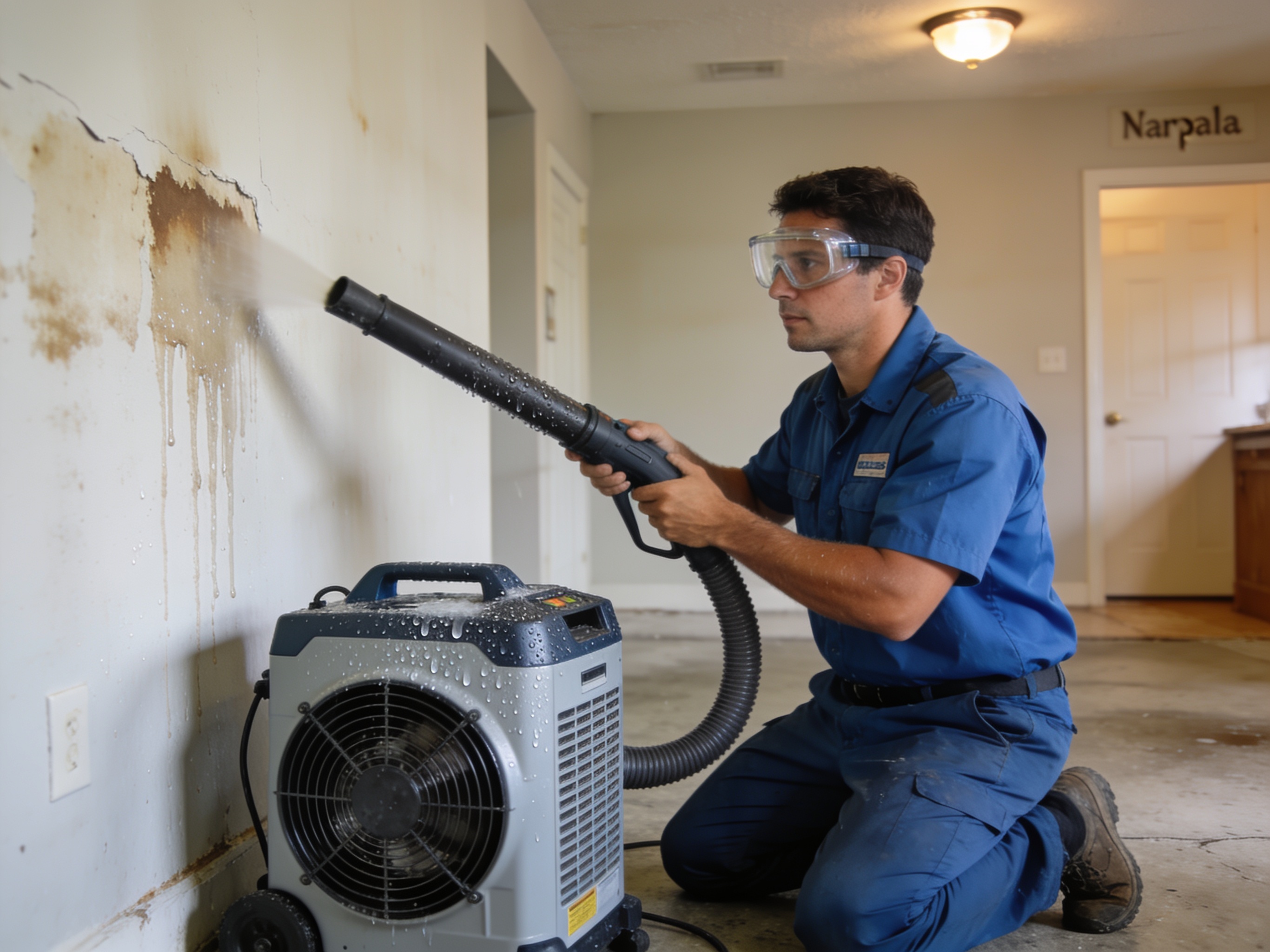
In Collier County homes built before 1980, especially those in Old Naples and Aqualane Shores, plaster and lathe walls hold moisture longer than modern drywall. Tropical savanna humidity keeps relative levels above 70 percent even in winter, so standard fans fail and hidden pockets behind baseboards or under tile in Port Royal estates require industrial dehumidifiers tied to moisture meters. We map every wall and subfloor before starting because skipping this step lets mold return within weeks once the warm, moist air from the Gulf settles back in.
Edge cases appear after roof leaks near Fifth Avenue South or appliance failures in Downtown Naples condos where HVAC returns pull moist air through cavities. Closed-cell foam insulation in newer Marco Island builds can trap water against framing, while older crawl spaces in Bonita Springs properties sit on sandy soil that wicks groundwater upward. We pull baseboards, drill strategic weep holes, and run low-grain refrigerant units for days rather than hours to reach the 12-15 percent moisture content required before any rebuild begins.
Florida building codes require documented drying logs when insurance claims involve structural elements. We log readings every 24 hours and adjust equipment placement because a single missed joist in a 1950s Port Royal home can lead to sagging floors later. Warm winter temperatures here mean we rarely battle freezing lines, yet the constant humidity demands daily filter changes on our equipment to maintain extraction rates.
Technician insight
In Naples the thing that catches most people out with structural drying is how the tropical humidity keeps feeding moisture back into older plaster walls in Old Naples and Downtown Naples long after the initial leak is fixed. Homeowners often run box fans for a few days and think the job is done, but without daily meter checks on the framing we see hidden rot start in weeks because the sandy soil and warm winters never give the structure a dry window.
Hidden Moisture Behind Plaster in Old Naples
Water from a roof leak near Third Street South had wicked into lathe-and-plaster walls of a 1960s home. Initial fans left moisture readings above 25 percent in the studs. We mapped the cavities, placed targeted dehumidifiers, and ran equipment for six days until readings dropped below 12 percent. The owners avoided mold growth and full wall replacement.
Structural Drying Services Services We Offer
✓Moisture Mapping and Assessment
We use pin and pinless meters plus infrared cameras to locate hidden water behind walls and under floors in Naples homes before drying begins.
✓Industrial Dehumidification Setup
Placement of low-grain refrigerant units sized for Collier County humidity levels to pull moisture from plaster, drywall, and hardwood in Old Naples and Aqualane Shores properties.
✓Crawl Space and Subfloor Drying
Targeted drying of sandy-soil crawl spaces common in Bonita Springs and Marco Island homes where groundwater wicking keeps framing wet long after surface water is gone.
✓Plaster Wall Drying Protocols
Controlled drying of historic lathe-and-plaster walls found in Downtown Naples and Port Royal to avoid cracking while reaching safe moisture levels.
✓Post-Drying Verification
Final moisture readings and documentation required for insurance claims on structural elements in Naples properties after equipment is removed.
Structural Drying Services Cost in Naples, FL
| Service | Typical Range | What Affects It |
|---|---|---|
| Initial moisture mapping visit | $150–$300 | Larger homes in Port Royal or multi-story Old Naples properties increase time on site. |
| Daily dehumidifier and air mover rental | $250–$600 | Runtime length varies with humidity levels common in Collier County. |
| Crawl space drying package | $800–$1800 | Higher end applies when sandy soil and groundwater wicking are present. |
| Final verification and documentation | $200–$400 | Required for insurance claims involving structural elements. |
Ranges are typical for Naples, FL and confirmed with an exact written quote before any work starts.
How it works
- 1
Initial Assessment
We arrive at your Naples address, document visible damage, and run moisture meters across walls, floors, and ceilings to map affected areas.
- 2
Equipment Placement
Dehumidifiers, air movers, and containment barriers are positioned based on readings, with extra attention to older plaster in Old Naples homes.
- 3
Daily Monitoring
Readings are taken every 24 hours and equipment is adjusted until all structural materials reach safe moisture content.
- 4
Final Clearance
We provide documented logs and confirm the structure is dry before any reconstruction work starts.
Pricing
Pricing depends on square footage affected and equipment runtime; we provide upfront quotes after the initial assessment.