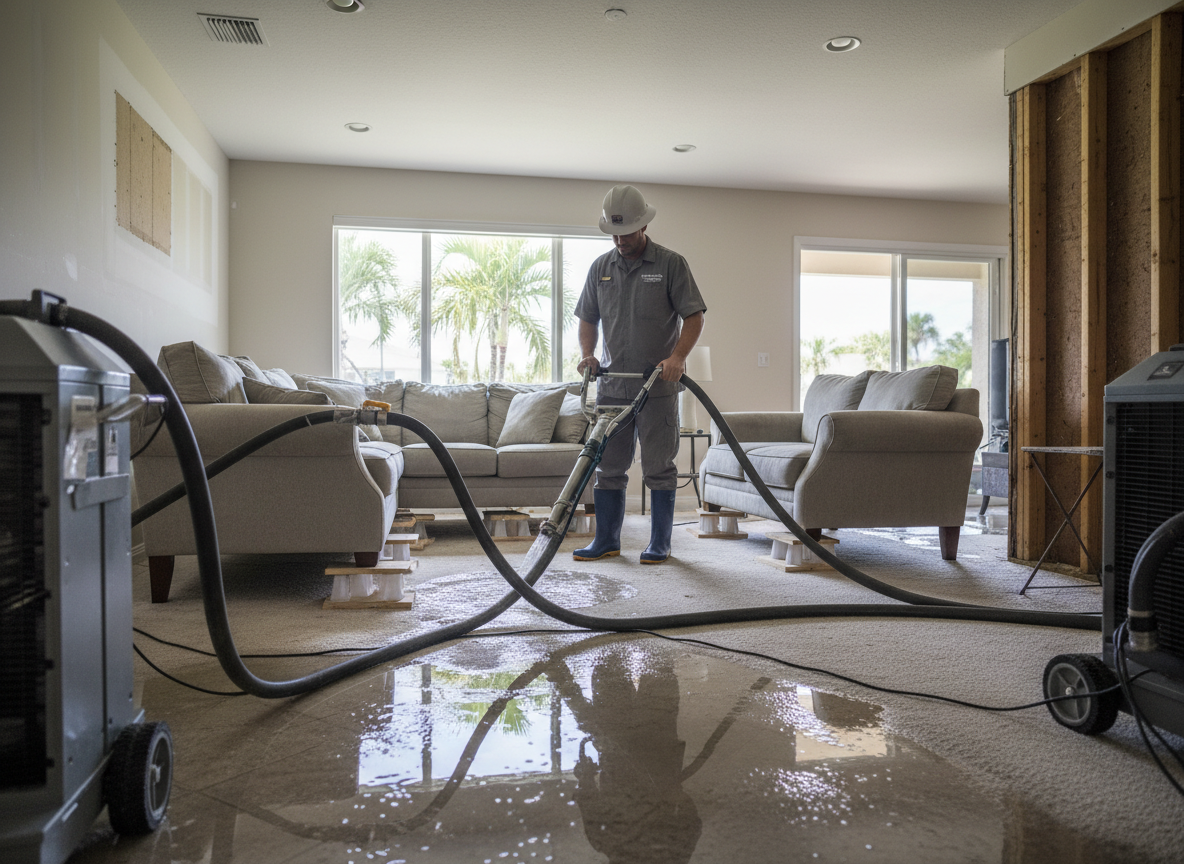
Naples homes built before 1980 in Old Naples and Downtown often feature plaster over lath or early slab-on-grade construction that traps moisture under tile and behind baseboards. After a supply line failure or heavy rain, water migrates along the slab edge into adjacent rooms faster than in newer builds, requiring moisture mapping with meters at multiple depths rather than surface readings alone. Warm winter temperatures in Collier County keep relative humidity elevated, so fans and dehumidifiers must run longer to reach the 40 percent target before any wall cavities are closed.
Storm surge or prolonged rain can push water under sliding glass doors common in Port Royal and Aqualane Shores properties. The sandy soil drains quickly on top but leaves damp sub-slab material that later feeds mold growth if not addressed. Technicians remove baseboards, drill small weep holes at the slab perimeter, and place air movers to create negative pressure that pulls moisture outward instead of pushing it deeper into the home.
When water reaches cabinetry or built-in furniture in these neighborhoods, particle board delaminates within 48 hours in the local climate. Rather than full replacement on every job, crews test for delamination with a moisture probe and often can save the carcasses by drying them in place with directed airflow while the homeowner stays nearby in Bonita Springs or Marco Island hotels arranged through insurance. This approach reduces both cost and disposal volume compared with gut-and-replace methods used farther north.
Technician insight
In Naples the thing that catches most people out with residential water damage restoration is how fast moisture travels under the slab in Old Naples and Downtown homes. The sandy soil and warm winters keep the ground damp longer than owners expect, so a small leak under a bathroom can reach the living room in two days if we do not pull the baseboards and set perimeter drying right away.
Slab Leak Under Tile in Old Naples
A supply line under the master bath let go overnight. Water traveled along the slab and under the hallway tile into the living room. We mapped high readings at the slab edge, pulled baseboards, drilled weep holes, and ran negative air for four days. Readings returned to normal and the homeowner avoided replacing the entire hallway floor.
Residential Water Damage Restoration Services We Offer
✓Emergency Water Extraction
Rapid removal of standing water from slabs and carpets using truck-mounted pumps sized for Naples humidity so secondary damage stays minimal.
✓Structural Drying for Slab Homes
Targeted drying of concrete slabs and subflooring common in Aqualane Shores and Port Royal using perimeter weep holes and negative air setups.
✓Plaster Wall Moisture Removal
Controlled drying behind original plaster walls in Old Naples and Downtown homes without full demolition when readings allow salvage.
✓Mold Prevention After Leaks
Antimicrobial treatment and dehumidification cycles that stop mold colonies from forming in the warm Collier County winters.
✓Cabinet and Built-In Drying
In-place drying of particle board cabinetry to avoid replacement in kitchens typical of 1970s Naples construction.
Residential Water Damage Restoration Cost in Naples, FL
| Service | Typical Range | What Affects It |
|---|---|---|
| Single-room extraction and drying | $450–$900 | Depends on square footage and whether slab weep holes are needed. |
| Whole-home drying after storm leak | $1,800–$3,500 | Varies with number of affected rooms and length of equipment runtime. |
| Mold prevention add-on | $300–$600 | Applied during drying when humidity stays above 55 percent. |
Ranges are typical for Naples, FL and confirmed with an exact written quote before any work starts.
How it works
- 1
Arrival And Containment
Technicians arrive from the Rosemeade Lane shop, set up containment barriers, and stop the water source before mapping affected rooms.
- 2
Extraction And Moisture Mapping
Standing water is pumped out and meters record readings at slab edges, wall cavities, and under tile throughout the home.
- 3
Drying And Monitoring
Air movers and dehumidifiers run with daily checks until readings drop below 40 percent relative humidity and stay there.
- 4
Final Clearance
Walls and floors are retested, containment is removed, and the homeowner receives a written moisture log for insurance.
Pricing
Most residential jobs fall between a few hundred dollars for localized drying and several thousand when multiple rooms and slab edges are involved.