2026-10-14 ·
Handling Water in Garages and Driveways After Naples Flooding
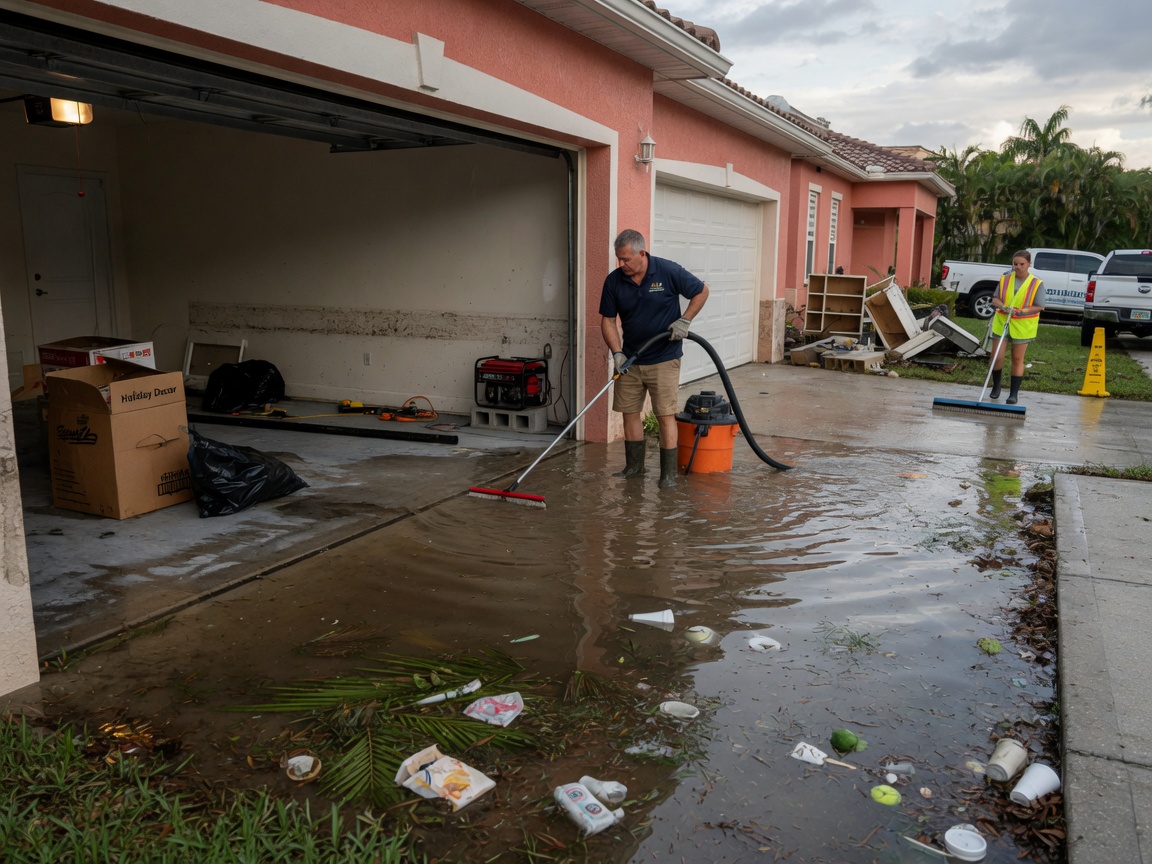
After Naples flooding, water in garages and driveways should be extracted within the first 24 hours and fully dried within 3 to 5 days to limit moisture absorption into concrete slabs and prevent secondary mold issues common in the area's tropical savanna climate.
Assessing Flood Impact on Concrete Surfaces
Garages in neighborhoods like Old Naples and Port Royal often sit at grade with older concrete that has settled over decades, allowing floodwater from heavy afternoon rains to pool against walls and under vehicles. Driveways in Aqualane Shores and Downtown Naples frequently slope toward the street, yet water still backs up when Collier County storm drains are overwhelmed. Walk the perimeter first and note any cracks wider than 1/8 inch or discoloration along the base of garage walls, as these indicate where moisture has already wicked upward. Check for sediment lines on the floor that mark the high-water mark so you can focus drying efforts on the saturated zone rather than the entire slab. In homes near Fifth Avenue South or the Naples Pier, salt-laden water from tidal influence can leave a white residue that accelerates spalling if left untreated.
Drying Garages After Standing Water Recedes
Once visible water is gone, run high-velocity air movers across the slab for at least 48 hours while monitoring moisture levels with a meter; concrete that reads above 4 percent needs continued drying. Place dehumidifiers rated for 70-pint daily removal in the center of the garage and empty them twice daily during warm winter months when humidity stays elevated. Remove any stored items within 12 hours so air can reach the floor; cardboard boxes and particleboard shelving absorb water quickly and become mold sources. In Port Royal homes with attached garages, open interior doors briefly to equalize pressure but close them again to keep conditioned air from the living space from feeding additional moisture into the wet zone. If the garage connects to living areas in older Aqualane Shores properties, watch for musty odors that signal hidden moisture under thresholds.
Managing Driveway Water and Drainage Issues
Driveways in East Naples and near Marco Island often consist of pavers or stamped concrete that trap water between joints after storm surges. Sweep loose debris first, then use a wet vac to pull water from low spots rather than letting it evaporate and leave mineral stains. For paver driveways common in Golden Gate Estates, lift a few units at the lowest point to check the sand base; saturated sand needs replacement before resetting pavers to restore proper drainage. Avoid pressure washing immediately after flooding because high-pressure water can force sediment deeper into control joints. Instead, allow the surface to dry for 48 hours, then apply a masonry sealer formulated for Florida limestone to reduce future absorption. Residents in Royal Harbor and Moorings frequently see tidal water linger on driveways for days, so repeated extraction passes with a submersible pump are often required before the slab can be considered dry.
Preventing Mold Growth in Humid Conditions
Collier County's warm winters keep relative humidity above 70 percent for weeks after flooding, giving mold spores the moisture they need to colonize within 48 to 72 hours on any organic material left in contact with the slab. Sweep out all silt and leaves, then treat the concrete with a 1:10 bleach solution only after the surface has dried to the touch; never apply it to wet concrete because dilution reduces effectiveness. In garages storing tools or holiday decorations, move everything outside for inspection and discard any porous items that stayed submerged longer than 24 hours. Watch baseboards and drywall that sit directly on the garage floor in North Naples homes; even a half-inch of wicking can support hidden mold colonies behind trim. If musty smells persist after drying, the slab may still hold trapped moisture that requires professional structural drying services.
When Professional Extraction Becomes Necessary
Homeowners can manage shallow water less than 2 inches deep on flat driveways, but any water that reaches electrical outlets, furnace bases, or extends under living-space additions calls for storm and flood water cleanup. Garages attached to waterfront homes in Port Royal often hide utilities beneath the slab, and repeated tidal flooding can corrode wiring that is not rated for submersion. If the water carries silt from nearby canals or carries a sewage odor, stop DIY efforts and contact specialists who can document the contamination for insurance. Older homes in Old Naples with single-wythe block walls are especially vulnerable because moisture travels horizontally into adjacent rooms. For guidance on what else to inspect after heavy rains, see What Naples Residents Should Check After Heavy Afternoon Storms.
Business hours at 435 Rosemeade Ln, Naples, FL 34105 are Mon–Fri 8am–6pm and Sat 9am–2pm for questions about equipment rental or next-step assessments.