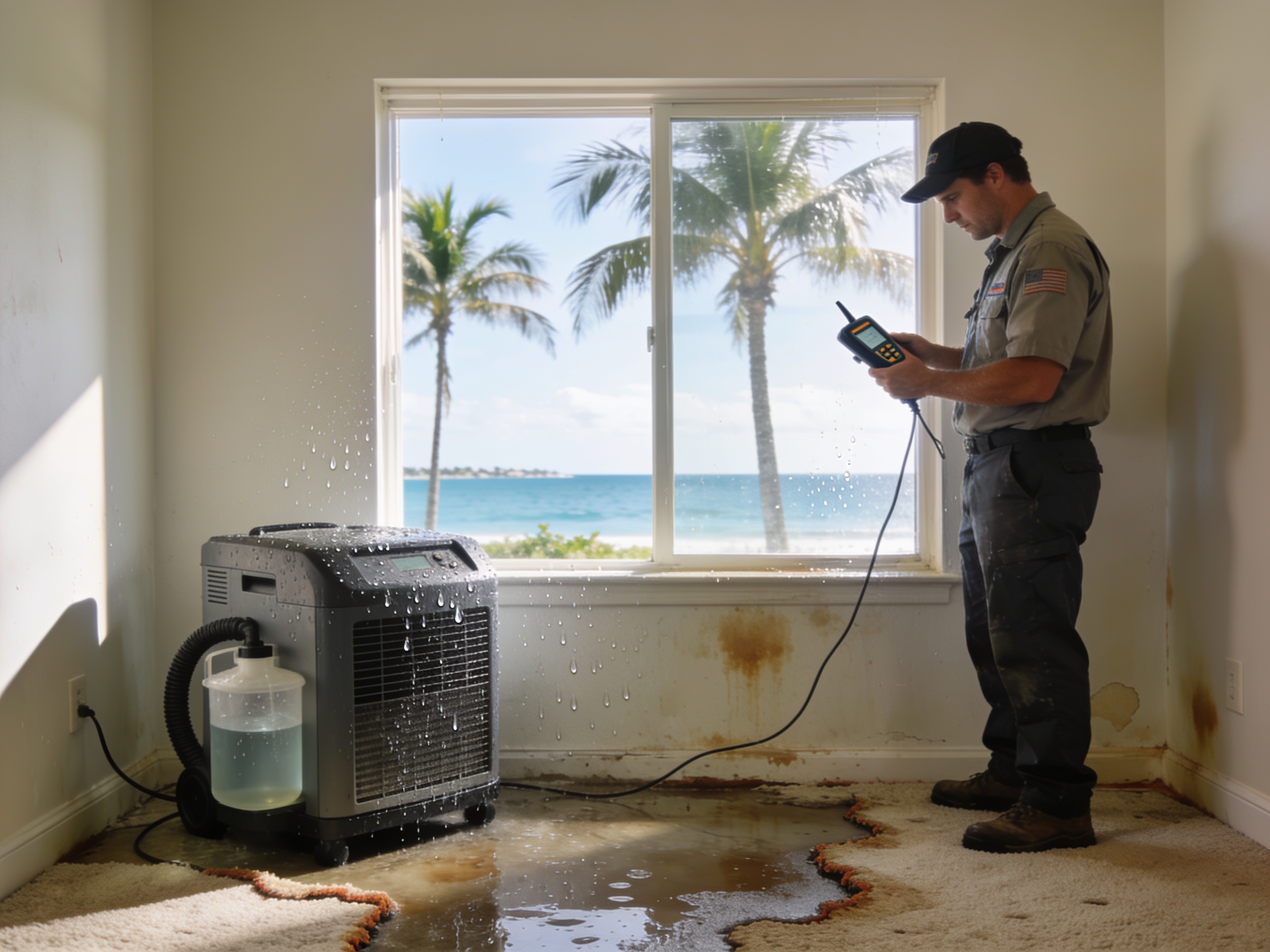
Pelican Bay homes sit on low-lying lots between Vanderbilt Beach Road and the Gulf, where heavy tropical rains quickly overwhelm drainage and push water under elevated slabs and into garage levels. Our crews reach the community via the main gate off US 41 and work inside the gated streets to pull water from under tile in villas and from carpeted second-floor units in mid-rise buildings. Warm winter humidity keeps moisture trapped in drywall longer than in drier inland spots, so we run dehumidifiers longer on every job.
Many Pelican Bay properties were built in the 1980s and 1990s with stucco exteriors and shared walls that let leaks travel between units. When a roof leak or appliance failure hits, water often migrates into neighboring condos along Pelican Bay Boulevard or near the golf course fairways. We stage equipment on the limited parking pads and use moisture meters on both sides of the shared walls before we close any job.
Access to the beach club and Clam Pass Park means some jobs involve saltwater intrusion after king tides or storms. Salt left behind speeds corrosion on metal HVAC components, so we flush lines and treat affected wood framing before mold sets in the warm Collier County air.
Around Pelican Bay
We regularly work near:
- 📍Pelican Bay Boulevard
- 📍Clam Pass Park
- 📍Vanderbilt Beach Road
- 📍Pelican Bay Community Center
- 📍The Club at Pelican Bay
Water Damage Restoration in Pelican Bay — Local Notes
- •Pelican Bay villas often have slab-on-grade construction with post-tension cables; we map cable locations before drilling for sub-slab drying.
- •Gated entry and narrow interior streets require smaller equipment trailers and advance notice to security for after-hours drying checks.
- •Canal-front lots drain slowly in the rainy season, so extraction crews stage extra pumps along properties near the south end of the community.
- •High-rise condos along the beach have limited elevator access, so we coordinate with building management to move air movers and dehumidifiers floor by floor.