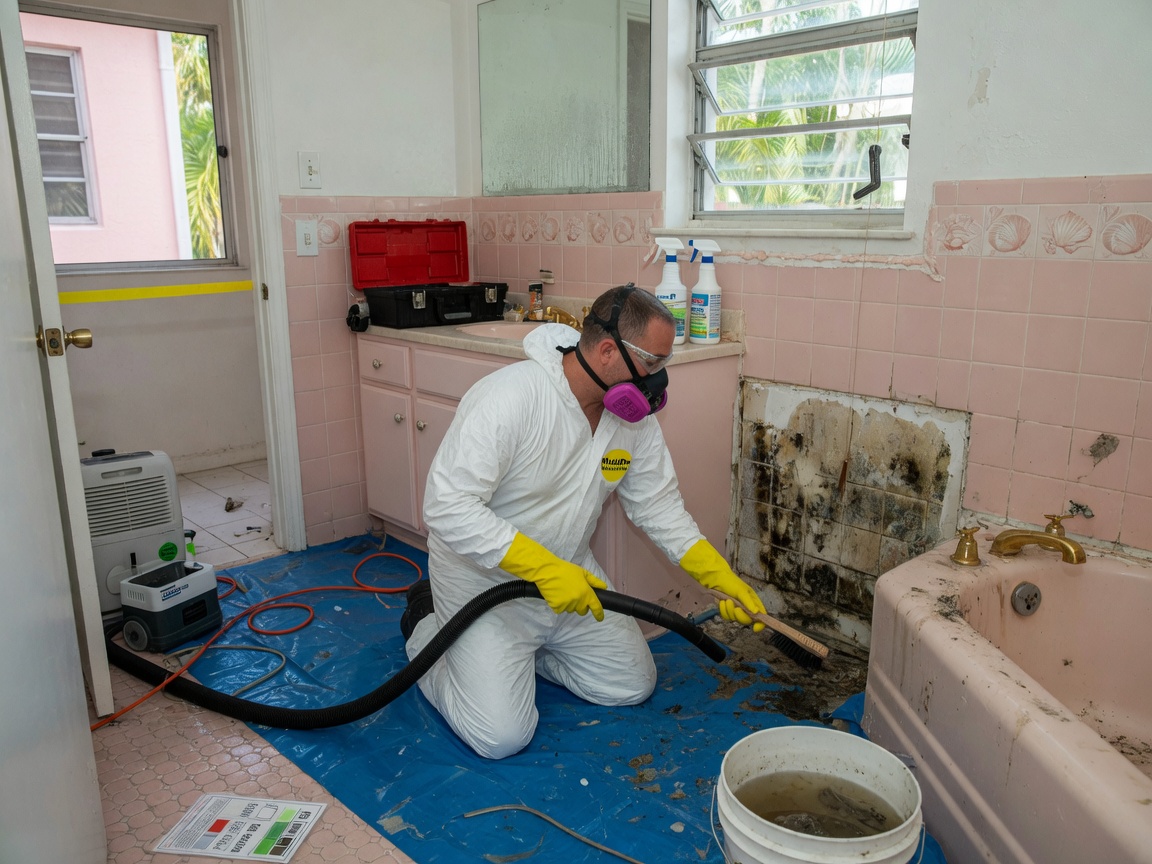
Bathrooms in Naples homes built before the 1990s often feature original tile over moisture-prone drywall that traps water from slow leaks around tubs and vanities. Warm winters keep indoor humidity elevated year-round, allowing mold to spread behind fixtures without obvious surface signs. Technicians check for hidden growth along shower pans and under cabinets where condensation meets aged grout lines common in Old Naples and Downtown Naples properties.
Removal work here requires isolating the space with plastic sheeting and negative air to prevent spores from drifting into living areas, especially in compact layouts found in Port Royal and Aqualane Shores. Porous materials like baseboards and drywall sections are cut out and bagged on site. After extraction, surfaces receive antimicrobial treatment suited to the tropical savanna conditions that promote rapid regrowth if any moisture remains.
Edge cases include mold reaching subfloor plywood in raised homes near the Naples Pier area or spreading into adjacent closets due to poor ventilation. Technicians test moisture levels in nearby walls before closing up to avoid callbacks. Work follows Collier County building practices for residential interiors without requiring permits for non-structural removal.
Homeowners sometimes attempt bleach cleaning on visible spots only to see regrowth within weeks because the source leak or humidity issue stays unaddressed. Proper removal includes locating the water entry point, whether from roof runoff during storms or failed seals around windows common in coastal Collier County neighborhoods.
Technician insight
In Naples, the thing that catches most people out with Bathroom Mold Removal is how quickly growth returns behind vanities in Old Naples homes when original cast-iron drains leak slowly into the slab during our warm winters. Homeowners often repaint over spots without pulling the cabinet, so the job expands once we open the wall.
Hidden Growth Behind Vanity in Old Naples
A homeowner in Old Naples noticed musty odor near the sink after heavy rain. Inspection found water tracking from a corroded supply line into the particleboard base and drywall. Crew contained the room, removed the affected cabinet and wall sections, dried the area, and treated remaining surfaces. Odor cleared and no regrowth appeared after follow-up check.
Bathroom Mold Removal Services We Offer
✓Shower Stall Mold Remediation
Removes mold from tile grout and pan liners while addressing leaks that allow water to reach wall cavities in humid Naples bathrooms.
✓Vanity Cabinet Mold Removal
Extracts growth from particleboard and surrounding drywall caused by sink overflows or pipe condensation in older Collier County homes.
✓Tub Surround Mold Treatment
Targets mold behind acrylic or tile surrounds where steam and poor ventilation combine in warm winter conditions.
✓Flooring Mold Extraction
Removes mold from vinyl or tile underlayment after leaks, preventing spread into subfloors common in Aqualane Shores properties.
✓Ceiling Mold Remediation
Addresses mold on bathroom ceilings from roof leaks or high humidity that affects homes near Fifth Avenue South and Third Street South.
Bathroom Mold Removal Cost in Naples, FL
| Service | Typical Range | What Affects It |
|---|---|---|
| Small bathroom inspection and report | $150–$300 | Varies with number of rooms checked and hidden access needs |
| Shower or vanity mold removal | $800–$1,800 | Depends on square footage and whether subfloor work is required |
| Full bathroom remediation | $2,000–$4,500 | Higher when multiple walls or ceiling sections need replacement |
| Post-removal drying equipment rental | $250–$600 | Based on number of days needed for moisture normalization |
Ranges are typical for Naples, FL and confirmed with an exact written quote before any work starts.
How it works
- 1
On-Site Inspection
Technician checks moisture levels, visible growth, and hidden areas behind fixtures using meters and borescopes.
- 2
Containment Setup
Plastic barriers and air scrubbers isolate the bathroom to keep spores from moving into other rooms.
- 3
Material Removal
Affected drywall, baseboards, and cabinet sections are cut out and sealed for disposal.
- 4
Drying and Treatment
Dehumidifiers and air movers dry the space before antimicrobial application to remaining surfaces.
- 5
Final Clearance
Post-remediation inspection confirms dryness and no active growth before barriers come down.
Pricing
Pricing based on inspection of extent, materials affected, and access difficulty.