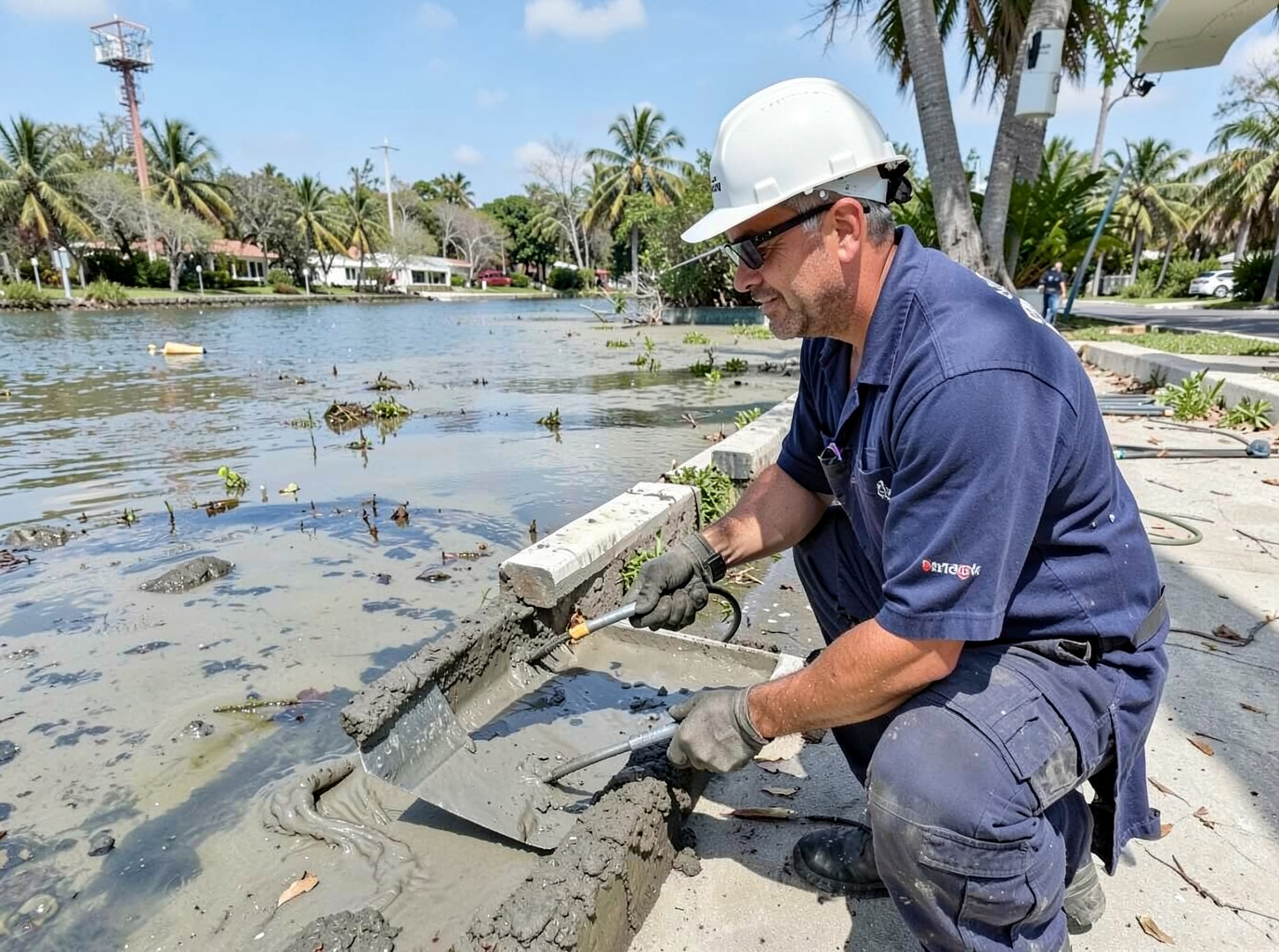
Naples homes in older neighborhoods like Old Naples and Downtown often feature lath-and-plaster walls and raised wooden floors that trap moisture after flood events. In the tropical savanna climate, warm winter temperatures allow mold to colonize within 48 hours if standing water reaches subfloors or wall cavities. Technicians must remove saturated insulation and treat hidden growth behind baseboards without disturbing original plaster where possible. Failure to address soil moisture from the flat terrain near the Gulf can lead to recurring colonies months later.
Port Royal and Aqualane Shores properties sit close to tidal influences, so post-flood water often carries salts that complicate drying and promote surface mold on tile and grout. Standard dehumidification must be paired with antimicrobial rinses rated for high-humidity environments common in Collier County. Crews also check HVAC returns that pull air from crawl spaces, a frequent pathway for spores to spread through single-story ranch homes built in the 1960s and 1970s. Skipping these steps leaves residual growth that reappears during the next rainy season.
Marco Island and Bonita Springs residents sometimes bring jobs to Naples crews when local capacity is stretched after a named storm. In these cases, documentation of moisture readings at multiple depths in drywall becomes essential for insurance claims. Edge cases include mold in built-in cabinetry or under terrazzo floors, both common in mid-century Naples stock, requiring selective demolition rather than full gutting to preserve value.
Technician insight
In Naples, the thing that catches most people out with Post Flood Mold Remediation is how quickly spores colonize behind original plaster in Old Naples homes once summer rains push water under the slab; the flat terrain and high water table keep the ground damp for weeks, so skipping subfloor drying almost always means a callback within six months.
Aqualane Shores Flooding After Heavy Rains
Water entered a 1960s single-story home through the garage after prolonged rain. Moisture readings showed saturation in the master bedroom subfloor and insulation. Crews removed the affected sections, treated the joists, and ran drying equipment for four days until readings stabilized. The homeowner avoided full floor replacement and reported no recurrence during the following rainy season.
Post Flood Mold Remediation Services We Offer
✓Hidden Mold Inspection in Crawl Spaces
Thermal imaging and moisture mapping locate growth under older Naples homes where floodwater pools against pier foundations.
✓Flood-Damaged Drywall and Insulation Removal
Selective demolition of saturated materials in Old Naples and Port Royal homes prevents hidden colonies from spreading through plaster walls.
✓Post-Flood HVAC Mold Cleaning
Ductwork and coil treatment stops spores from recirculating after water intrusion in single-story Collier County properties.
✓Structural Drying After Tropical Storms
High-capacity dehumidifiers and air movers address humidity trapped in Aqualane Shores homes following heavy seasonal rains.
✓Carpet and Subfloor Mold Remediation
Removal of contaminated padding and treatment of wooden subfloors common in Downtown Naples residences after minor flooding.
Post Flood Mold Remediation Cost in Naples, FL
| Service | Typical Range | What Affects It |
|---|---|---|
| Crawl Space Mold Remediation | $1,200–$2,800 | Size of space and access difficulty in older raised homes |
| Wall Cavity Treatment | $800–$1,900 | Number of linear feet and whether plaster must be preserved |
| HVAC System Cleaning | $450–$950 | Extent of ductwork and coil contamination |
| Full Room Drying Package | $600–$1,400 | Duration of equipment rental after storm events |
Ranges are typical for Naples, FL and confirmed with an exact written quote before any work starts.
How it works
- 1
On-Site Moisture Assessment
Technicians map water migration through walls and floors using meters calibrated for local building materials.
- 2
Containment and Air Filtration
Negative air machines isolate affected rooms to keep spores from reaching unaffected areas of the home.
- 3
Removal of Affected Materials
Saturated drywall, insulation, and trim are cut out and bagged for disposal following IICRC protocols.
- 4
Final Drying and Verification
Equipment runs until moisture levels match unaffected areas, followed by clearance testing before reconstruction.
Pricing
Pricing varies by square footage affected and depth of water intrusion; detailed estimates follow inspection.